English
 中文简体
中文简体 Español
Content
- 1 Material Science Foundation: Understanding High Elastic Polyester Yarn
- 2 Core Advantage 1: Superior Mechanical and Elastic Properties
- 3 Core Advantage 2: Processing Versatility and Economic Efficiency
- 4 Core Advantage 3: Enhanced End-Product Performance and Durability
- 5 Industry Standards and Sustainability Context
- 6 Frequently Asked Questions (FAQ)
- 6.1 1. How does the elastic recovery of High Elastic Polyester Yarn hold up after repeated washing?
- 6.2 2. Can it be used as a direct, one-to-one replacement for spandex in a fabric recipe?
- 6.3 3. What are the key technical specifications I should request from a supplier?
- 6.4 4. Is dyeing uniformity a challenge with this yarn?
- 6.5 5. What are the primary end-uses where it offers the greatest advantage over spandex blends?
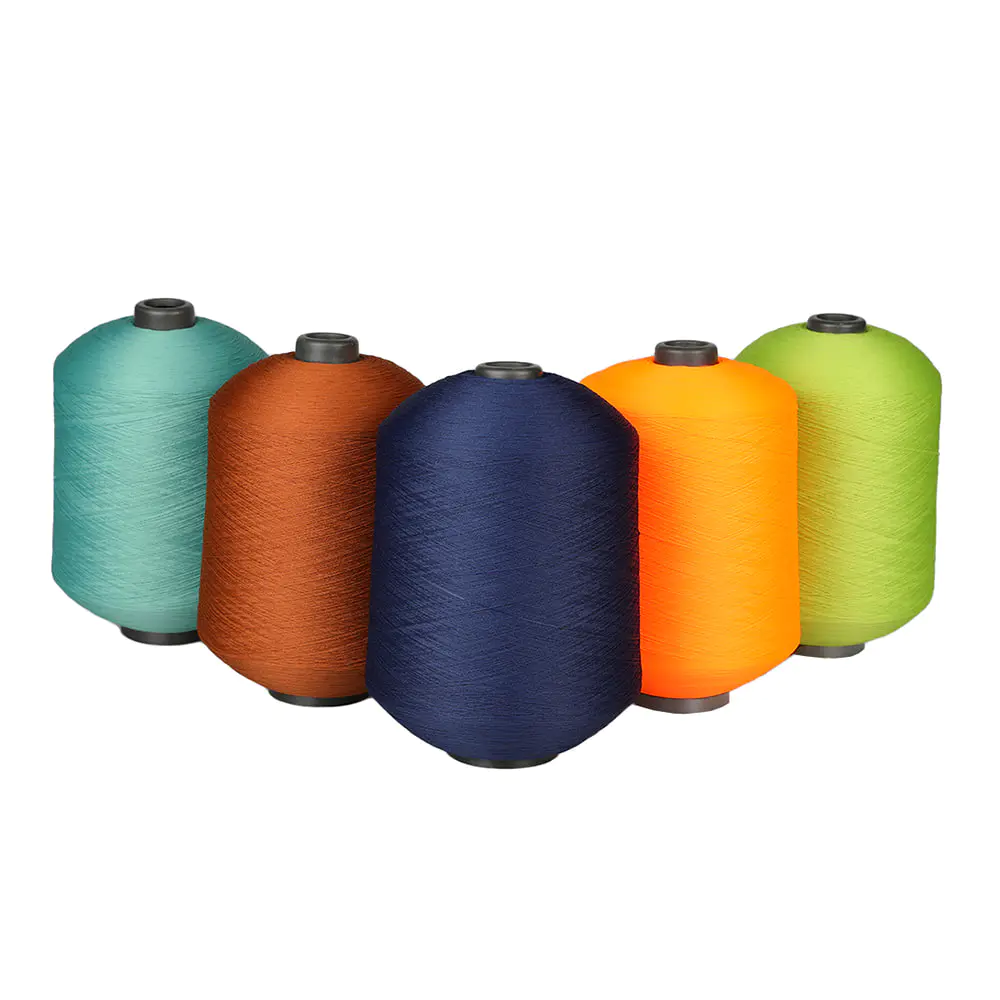
The modern textile industry is driven by a demand for fabrics that are not only aesthetically pleasing but also deliver uncompromising performance, durability, and value. At the intersection of innovation and practicality lies High Elastic Polyester Yarn, a specialized material engineered to meet rigorous technical demands across diverse applications. This article provides an engineer-level analysis of its core advantages, from fundamental polymer science to cost-driven procurement decisions, establishing why it is a critical component in advanced textile manufacturing.
Material Science Foundation: Understanding High Elastic Polyester Yarn
Unlike conventional polyester, High Elastic Polyester Yarn is engineered at the molecular level. Through advanced polycondensation and precise control of polymer chain length and crystallinity, a semi-rigid structure is created that provides inherent spring-like recovery. This intrinsic elasticity differentiates it from materials that rely solely on mechanical crimp for stretch.
The specific high elastic polyester yarn manufacturing process technology often involves modifications in the melt spinning and drawing stages. Key steps include controlled quenching to optimize amorphous regions, specialized drawing under specific heat and tension profiles to orient the polymer chains for optimal elastic memory, and potentially a relaxing heat-setting process to stabilize the yarn's structure. This sophisticated process is what grants the yarn its unique set of high elastic polyester yarn properties and specifications.
Core Advantage 1: Superior Mechanical and Elastic Properties
The primary value proposition of this yarn lies in its exceptional mechanical performance, which is quantifiable and directly impacts end-product quality.
Quantifiable Performance Metrics
- Elastic Recovery: Engineered for a high elastic recovery rate (typically >90%, and often reaching 95-98% after multiple cycles), significantly reducing permanent deformation in fabrics.
- Tenacity & Elongation Balance: Offers a superior balance, with tenacity often exceeding 3.5 cN/dtex and elongation at break optimally tuned between 20% and 40% for functional stretch.
- Low Stress Relaxation: Demonstrates minimal decay in holding force over time compared to some elastane-blended fabrics, ensuring consistent fit and compression in applications like sportswear.
Comparative Analysis with Spandex
While spandex (elastane) offers higher ultimate elongation, High Elastic Polyester Yarn provides distinct advantages in key areas critical for manufacturing and product lifespan. A comparison of their core mechanical and handling characteristics is crucial for informed material selection.
| Property | High Elastic Polyester Yarn | Spandex (Elastane) Filament |
| Elastic Recovery | Excellent (90-98%) | Excellent (95-99%) |
| Tenacity | High (3.5-5.0 cN/dtex) | Low (0.5-1.2 cN/dtex) |
| Thermal Stability | High (Melting point ~250°C) | Moderate (Softens ~150-200°C) |
| Chemical Resistance | Excellent, especially to chlorine, UV, and oils. | Good, but can degrade with prolonged chlorine/UV exposure. |
| Dyeability | Easily dyed with disperse dyes at high temperature. | Requires special dye classes and careful process control. |
Core Advantage 2: Processing Versatility and Economic Efficiency
This yarn integrates seamlessly into standard textile manufacturing, offering both performance and economic benefits.
Application-Specific Selection: The Swimwear Case
A prime example of its targeted use is in understanding how to choose high elastic polyester yarn for swimwear. The key drivers are chlorine/sea water resistance, UV stability, and colorfastness. High Elastic Polyester Yarn inherently resists degradation from chlorinated pool water and salt, outperforming many elastane-based fabrics which can become brittle and lose elasticity. Its excellent affinity for disperse dyes ensures vibrant, lasting colors even under harsh environmental stress.
Comprehensive Cost-Benefit Analysis
A critical consideration for B2B procurement is the high elastic polyester yarn vs spandex yarn cost comparison. The analysis extends beyond raw material price per kilogram.
| Cost Factor | High Elastic Polyester Yarn System | Spandex-Core/Blend System |
| Raw Material Cost | Generally lower and more stable. | Higher and subject to greater market volatility. |
| Processing Cost | Lower. Can be processed on standard knitting/warping machines without special handling for bare spandex. | Higher. Often requires core-spinning, covering, or precise tension control during knitting/weaving. |
| Dyeing & Finishing Cost | Standard polyester dyeing cycle is sufficient, simplifying the process. | May require two-bath dyeing or specialized cycles for the different fiber components. |
| Total Cost of Ownership | Often lower due to integrated durability, longer garment life, and simpler processing. | Can be higher when factoring in complex production and potential for faster performance degradation. |
According to the latest market analysis from the Textile Economics Bureau, the demand for integrated elastic solutions like high-performance polyester yarns grew by approximately 8% in 2024, driven largely by brands seeking to optimize supply chains and reduce dependency on volatile specialty elastomer markets. This shift highlights a strategic move toward materials that offer both performance and economic resilience.
Source: Textile Economics Bureau - 2024 Fiber Innovation Report
Core Advantage 3: Enhanced End-Product Performance and Durability
The advantages translate directly into superior fabric characteristics that resonate with end consumers and brand quality standards.
- Dimensional Stability & Wrinkle Resistance: Fabrics maintain shape better after stretching and washing, with minimal shrinkage or sagging.
- Superior Hand Feel & Drape: Can be engineered for a softer, more cotton-like feel or a smooth, sleek texture, offering designers greater versatility.
- Long-Term Durability: The inherent strength of polyester translates to excellent abrasion resistance, pilling resistance, and overall fabric longevity.
This durability is clearly reflected in straightforward high elastic polyester yarn washing and care instructions. Garments can typically withstand frequent machine washing at moderate temperatures, are often tumble-dry safe, and exhibit high resistance to damage from sunscreens, oils, and chlorinated water, simplifying care for the end-user and enhancing product life.
Industry Standards and Sustainability Context
The performance of these yarns is increasingly framed within industry standards and sustainability goals. The latest 2024 update to the Global Recycled Standard (GRS) and OEKO-TEX® STANDARD 100 has placed greater emphasis on the traceability and chemical safety of synthetic elastic components. High Elastic Polyester Yarn is inherently compatible with these frameworks, as it can be produced from recycled PET (rPET) sources without significant loss of performance, and its dyeing process aligns with ZDHC (Zero Discharge of Hazardous Chemicals) compliant chemistry. This positions it as a future-proof material in a regulated market.
Source: OEKO-TEX® - Standard 100 Updates; Textile Exchange - Global Recycled Standard
Frequently Asked Questions (FAQ)
1. How does the elastic recovery of High Elastic Polyester Yarn hold up after repeated washing?
Due to its inherent polymer structure and heat-setting during manufacturing, it exhibits excellent wash-fast elasticity. Independent tests against standard ISOs (e.g., ISO 6330) often show retention of over 85-90% of original recovery after 50 home laundering cycles, outperforming many blended fabrics where spandex degradation can occur.
2. Can it be used as a direct, one-to-one replacement for spandex in a fabric recipe?
Not always directly. It is a replacement for the *function* of spandex, but not a drop-in fiber. Fabric construction and target stretch percentage must be re-engineered. It often performs best in fabrics requiring moderate, functional stretch (15-40%) and high durability, rather than extreme, intimate-apparel level stretch.
3. What are the key technical specifications I should request from a supplier?
Focus on quantifiable metrics: Tenacity (cN/dtex), Elongation at Break (%), Elastic Recovery at specific elongation (e.g., 20%), Degree of Shrinkage in boiling water (%), and Thermal Stability temperature. Also inquire about the yarn's specific finish and its compatibility with dyeing auxiliaries.
4. Is dyeing uniformity a challenge with this yarn?
Generally, it is less challenging than dyeing fabrics containing spandex. As a pure polyester material, it dyes evenly with disperse dyes under high temperature. The key is ensuring consistent heat-setting prior to dyeing to lock in the yarn's structure and prevent differential shrinkage that can cause barré.
5. What are the primary end-uses where it offers the greatest advantage over spandex blends?
Its sweet spot includes: performance sportswear (for durability and compression), swimwear and beachwear (chlorine/UV resistance), durable workwear/uniforms, outdoor and technical apparel, and home textiles requiring shape retention (like fitted furniture covers). It is less suited for lightweight lingerie or garments requiring >100% stretch.